
California Views
The Pat Hathaway Photo Collection
Mr. Pat Hathaway, Photo Archivist
Historic Monterey, California • (831) 373-3811
Historic Monterey, California • (831) 373-3811
FSA Photo Digitization is best understood as a Library of Congress preservation and access project, not as a confirmed National Archives project. The supplied topic names the National Archives, but the cited institutional record identifies the Library of Congress as the custodian of the Farm Security Administration/Office of War Information photograph collection and the institution carrying out the high-resolution scanning work. That distinction matters because federal photo archives often move across agencies, and responsible coverage should match the project to the office that holds and describes the records.
The project is significant because the photographs document U.S. life during a period that stretched from the New Deal through World War II. The images are not just historical illustrations. They are federal records shaped by agency missions, photographer choices, cataloging practices, preservation risks, and public access decisions. For communities using images to discuss place, labor, migration, agriculture, housing, and civic memory, the digitization work creates a broader point of entry while preserving fragile originals.
The Library of Congress describes the FSA/Office of War Information collection as including about 175,000 black-and-white film negatives and transparencies, 1,610 color transparencies, and about 107,000 black-and-white photographic prints, most of which were made from the negatives or transparencies. The photographs were taken between 1935 and 1944 under programs managed first by the Resettlement Administration, then the Farm Security Administration, and later the Office of War Information, according to the Library’s collection background Library of Congress background.
That agency sequence is central to interpretation. A photograph made under a federal documentary program is not a neutral window by default. It carries information about the photographer, the agency assignment, the subject, the caption, and the later archive record. Digitization can widen access, but it does not remove the need to read each image with attention to date, place, caption language, and institutional history.
The collection was transferred to the Library of Congress in 1944, although access remained under the Office of War Information for a period. The material was physically moved into the Library in 1946. Those dates help explain why the project belongs in a Library of Congress context even though the images originated in federal agencies whose missions changed over time.
The phrase FSA Photo Digitization can sound like a single technical action, but the work sits at the intersection of public records, conservation, cataloging, and civic education. Earlier partial digitization began in the 1990s, when image-resolution capabilities were more limited. The later high-resolution effort for the full set of roughly 175,000 negatives began around 2010, based on the Library’s May 2026 account of the project.
As of May 5, 2026, fewer than 15,000 negatives remained to be scanned and uploaded, meaning more than 160,000 had already been digitized. The Library reported that the work had been underway for about 16 years and was “coming to an end, perhaps by the end of this year (2026).” It also described a 2026 workflow of about 1,000 negatives per month, or about 50 per working day, under current lab conditions Library of Congress project account.
The technical process described by the Library is deliberately restrained. Each negative is cleaned and inspected, then photographed at high resolution. Staff check the resulting digital image for visible problems such as dust, hairs, and scratches. The account does not describe editorial retouching of the image content; it refers instead to minimal cleaning with an air bulb. That distinction is important for researchers because the goal is not to make an image look newly made. The goal is to produce a faithful digital surrogate that supports access while reducing the need to handle vulnerable originals.
The negatives are not all alike. The Library’s 2026 account identifies nitrate film, 35 mm strips, old sheet glass formats, and larger 3-by-4-inch or 4-by-5-inch single negatives. These formats age differently and require different handling conditions. Nitrate negatives, which pose special storage risks, are kept in fire-proof rooms, including at the National Audio-Visual Conservation Center in Culpeper, Virginia.
For anyone who has watched a local history group handle family prints at a library table, the institutional version of that care is easy to recognize, though the scale is far greater. The same basic discipline applies: inspect first, handle less, document clearly, and avoid changing the historical evidence. Community archive projects can learn from that order of operations, even when they do not have federal laboratory equipment.

FSA Photo Digitization improves access, but it does not answer every historical question by itself. A scan can show a face, a road, a farm, a storefront, or a room with more clarity than an older web image. It cannot, without supporting records, fully explain the subject’s consent, the photographer’s instructions, the agency’s publication plans, or the later uses of the image. Responsible interpretation should separate what the record confirms from what viewers infer.
This caution is not a reason to keep the collection distant from the public. It is a reason to use it well. Teachers, local historians, photographers, outdoor heritage groups, and civic organizations can study these images while making clear which details come from captions, which come from visible evidence, and which remain unresolved. For readers comparing how public records are discussed across related outlets, The US Report offers another point of comparison within the same network.
The strongest community value of the project may be its ability to support careful visual storytelling. A local cycling group planning a heritage route, a wellness initiative studying access to public space, or a school project on rural life can use digitized images as starting points for discussion. Those uses should still respect the collection’s federal origins and the limits of the record.
Related archive coverage on this site has examined how scanning can protect fragile negatives while broadening public access; that institutional access question is also central to FSA photo digitization and public memory. The key is to treat digitized photographs as records, not just pictures. They can invite participation, but they also require captions, dates, collection notes, and source attribution.
FSA Photo Digitization matters because it links preservation practice with public understanding. The work protects physical negatives by reducing handling, improves research access through higher-resolution files, and keeps attention on a collection that has shaped how many Americans picture the 1930s and early 1940s. The project also shows why institutional attribution is not a minor detail. The images came from federal documentary programs, but the current preservation and access work described in the supplied research is the Library of Congress project.
For communities, the most useful response is not passive admiration. It is careful use: cite the institution, keep dates attached to images, avoid unsupported claims about subjects, and discuss what the photographs do and do not show. In that sense, the digitization of the FSA/OWI negatives is both a technical preservation effort and a public education resource, grounded in archival evidence rather than nostalgia alone.

 Posted by Pat Hathaway | September 10, 2026
The Tarrazú coffee is officially gone, the Costa Rican humidity has finally broken my spirit, and my rental in Santa Ana currently smells like rubbing alcohol and silica gel. It is Thursday morning, and I am finally packing the gear to head back to the States.
 Posted by Pat Hathaway | September 7, 2026
The rain is coming down in absolute sheets over the Santa Ana valley this Monday morning. I am sitting on a covered patio in Costa Rica, nursing a scalding mug of local Tarrazú roast, and trying to ignore the rapid-fire text messages currently blowing up my phone. Big Boy Dan has officially reached the bargaining stage of grief.


“A Hasselblad and Ilford FP4, Patrick. You are finally treating photography with the reverence it demands. Leave the digital computer in the safe.”I’m not making any promises, Roy. But for today, the mechanical shutter reigns supreme.
Leadville Trail photography is a study in endurance, altitude, and community recordkeeping. The 32nd annual Leadville Trail 100 MTB presented by Kenetik was held on August 15, 2026, in Leadville, Colorado, drawing approximately 1,700 athletes from all 50 U.S. states and 21 countries, with ages reported from 18 to 80, according to Life Time’s race report. For photographers, those confirmed details matter because they place the images in a specific civic, athletic, and geographic context rather than treating the event as a set of isolated action shots.
The 2026 race has already taken place, so the most accurate frame is retrospective. Any photo essay, archive, or caption set should refer to the race in the past tense and use the date August 15, 2026. That may sound basic, but it is part of responsible visual documentation. A rider climbing through thin air, a volunteer working an aid station, or a family waiting near the finish line all become more useful historical records when the caption includes date, place, event name, and source-based details.
The scale of the Leadville Trail 100 MTB makes its visual record different from a small local ride. A field of about 1,700 athletes creates repeated patterns: long lines of riders, staggered body language, shifting group dynamics, and visible differences between elite pacing and survival pacing. A cautious photographer does not need to exaggerate the difficulty; the verified distance, elevation, and altitude already explain much of what appears in the frame.
The official race page describes the route as about 105.3 miles with roughly 12,304 feet of elevation gain. It also lists a low point of about 9,180 feet and a high point near 12,500 feet at Columbine Mine, according to the Leadville Race Series. Those numbers help explain why images from the event often show riders in varied states of effort across dirt road sections, climbing zones, aid areas, and exposed high-country terrain.
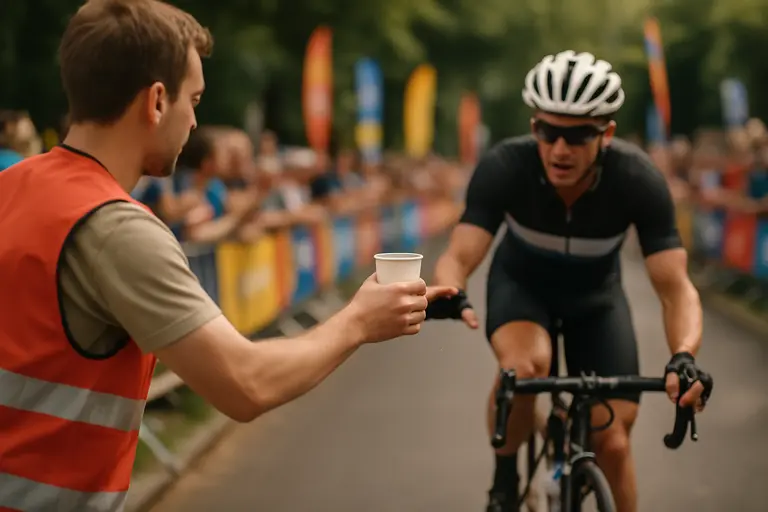
From a photography standpoint, that means the course is not just background. It is evidence. A wide image that shows a rider small against a long climb can communicate scale more accurately than a tight facial expression alone. A close image of hands on bars, dust on shoes, or a bottle handoff can document the human systems that support a race of this length. Both approaches are valid, but each needs captions that avoid claims not visible in the image or supported by race information.
A field spanning professional riders and first-time finishers calls for a balanced archive. Elite images often travel farther because results draw attention, but community-led cycling events are also built by mid-pack riders, age-group participants, support crews, staff, and volunteers. A photo archive that includes only podium contenders may miss the broader civic footprint of the race.
This is where adventure photography and public memory overlap. A rider from another country, a local volunteer, and a family member waiting at a checkpoint each add context to how the event functioned on August 15, 2026. For a site that also considers how public communication shapes community understanding, related coverage at a related site in the same network offers a useful reminder: events are not only results; they are also shared records.
Photographing a high-altitude mountain bike race asks for more than fast shutter speed. It asks for restraint. The Leadville course includes altitude changes that affect pacing, breathing, body posture, and recovery. Photographers should be careful not to read too much into a single frame. A grimace may show effort, but it does not, by itself, confirm injury, dehydration, or distress.
Course position can change the meaning of an image. A rider photographed early may look controlled and efficient. The same rider photographed deep into the return leg may show fatigue. Without a time, mile marker, or direction of travel, the image risks losing documentary value. Event photographers can reduce that risk by recording where they stood, whether riders were outbound or inbound, and whether the image came from a climb, descent, aid area, or finish-zone location.
Light also changes the record. Dust, glare, shadows, and moving wheels can create dramatic images, but drama should not replace accuracy. If an image is heavily cropped, color-graded, or edited for contrast, the archive should preserve an original version as well. That practice protects the record and allows future editors, families, and historians to distinguish documentary material from presentation choices.
Endurance sport produces honest emotion: strain, relief, disappointment, focus, and joy. A careful photographer can honor those moments without turning vulnerable riders into spectacle. That means avoiding captions that diagnose, mock, or speculate. If a rider crashed, withdrew, won, or finished, those claims need confirmation from official results or race communications before they are attached to a public image.
There is also a practical wellness angle. Community cycling depends on trust. Riders are more likely to welcome photographers when they understand that images will be used with care, that minors and private individuals will not be singled out without reason, and that captions will not imply facts beyond the evidence. As an outdoor enthusiast, I value the energy of these events; as a recordkeeper, I also respect the limits of what a photograph can prove.
Race results help organize images after the event, but they should not crowd out the rest of the story. The 2026 edition included a confirmed men’s milestone: Keegan Swenson won and tied the all-time mark of six consecutive Leadville Trail 100 MTB victories, a record previously associated with David “Dave” Wiens, according to Life Time’s account. That fact can anchor a gallery, but it should sit within the full setting of the race rather than replacing it.
For photographers, a six-win mark presents a clear editorial challenge. Images of the winner need precision: correct name, date, event title, and result context. A finish image may carry historic value, but only if the caption stays close to confirmed information. If the frame shows the finish, say that. If it shows a rider earlier on course, avoid implying that it depicts the decisive moment unless that is documented.
For Leadville Trail photography, this distinction is not academic. Future viewers may use archived images to understand how the 2026 event unfolded. If a caption blurs a climb image, a sprint image, and a podium image into one loose narrative, it weakens the archive. Accurate sequencing helps retain both athletic meaning and historical usefulness.
The official race information listed a $60,000 elite prize purse split evenly across the men’s and women’s top five, with $10,000 for the winner. That detail is useful for editorial planning because it confirms that both elite fields were part of the same documented prize structure. A photo archive should reflect that institutional fact by giving equitable attention to men’s and women’s racing where images and verified information are available.
Equal framing does not mean identical imagery. It means comparable care: clear captions, race context, and image selection standards applied across the archive. If one field has complete captions and the other has vague labels, the record becomes uneven. The same applies to age-group riders and first-time finishers, whose stories may not be tied to prize money but still help define the event’s community reach.

A race gallery can have a short life on social platforms, but a well-kept archive can serve families, event organizers, local historians, sponsors, and riders for years. The Leadville Trail 100 MTB is especially suited to archival thinking because the confirmed field size, altitude range, course length, and international participation give the images cultural as well as athletic value.
Strong captions do not need to be long. They need to be accurate. A practical caption might include the rider’s name if verified, the race name, the date August 15, 2026, and the general course location if known. Metadata should preserve the original capture time, camera settings, and file history. If a photo has been edited for publication, keeping an unedited copy supports transparency.
Consent practices also matter. Public sporting events allow broad photography, but ethical use still calls for judgment, especially around medical situations, minors, or images that could embarrass private individuals. The strongest adventure galleries show effort without reducing people to their hardest moments.
For event teams and independent photographers, a useful post-race archive can be built around a few consistent fields:
These practices are not limited to Leadville. Similar community archive questions appear across endurance events, including how alpine weather, adaptive participation, and rider experience are documented in cycling event photography at Tour de Big Bear. The shared lesson is that outdoor sport photography works best when it respects both action and context.
Leadville Trail photography after the 2026 race should be read as more than a collection of dramatic images. It is a record of a specific event held on August 15, 2026, with a large and geographically wide field, a demanding high-altitude course, and a confirmed milestone in the men’s race. Those facts create the frame within which visual storytelling can be responsible.
The strongest archive will not depend on exaggeration. It will show the effort of riders, the structure of the course, the support around aid areas, and the public nature of a community endurance event. It will also preserve enough information for future viewers to understand what happened, where it happened, and what is still not shown by the image alone. That balance is where adventure photography becomes a reliable part of cultural memory.
“A mechanical camera, analog film, and surviving the TSA without a digital toy in sight. You are walking the righteous path, Patrick.”I’ll take the compliment while it lasts. The vintage Leica M4 is coming out of the safe this weekend. Keep your lenses clean, demand hand-checks at the airport, and stay away from the sportsbooks.
cycling event photography at Tour de Big Bear can be assessed as both sports documentation and cultural record. According to the official event overview, the 16th annual Tour de Big Bear took place July 31 to August 2, 2026, in Big Bear Lake, California, with road, gravel, and cross-country mountain biking among more than nine events at an alpine setting above 7,000 feet Tour de Big Bear overview. Those confirmed details give photographers a defined subject: riders moving through a demanding course, a mountain environment, and a weekend built around participation rather than a single finish-line moment.
From the perspective of a cyclist, trainer, and photographer, the useful question is not only whether the images are dramatic. The stronger question is whether they preserve evidence of effort, access, place, and community activity without overstating what the record shows. Research supplied for this article says professional photographers were stationed throughout the course and that official event photos were expected to be available to participants within 7 to 10 days after the event. The same research does not identify the photographers, the number of images made, or the archive’s long-term storage policy, so those details should not be assumed.
In this setting, cycling event photography works as event evidence because it records different kinds of action across the same weekend. The research notes identify challenging climbs, scenic descents, finish-line celebrations, awards activity, and community gatherings as photographed subjects. Each of those scenes supports a different part of the event record. A climb can show physical strain and pacing. A descent can show bike handling and the character of the route. A finish-line frame can show completion, while a post-ride image can document participation after the timed or organized riding is complete.
This evidence has limits. A photograph can show who appears in a frame, what equipment is visible, and what conditions are apparent at that instant. It cannot, by itself, establish training history, medical status, official timing, or rider intent. For that reason, responsible captions should avoid claims that are not supported by event records or direct statements. A careful caption might identify the event, date range, location, and discipline, while leaving performance interpretation to official results or rider testimony if those materials exist.
The official overview describes the Tour de Big Bear as taking place in Big Bear Lake, with alpine summer conditions and elevation above 7,000 feet. Those facts matter for visual storytelling. Light, tree cover, road surface, gravel dust, and mountain backdrops shape how a cycling image reads. They also affect rider presentation. At altitude, body language may show strain, but the image should not be used to infer a medical or fitness conclusion. A trainer can observe posture and cadence cues in a general sense, yet the photographic record remains a visual record, not a diagnostic tool.
The research also says the photography showcased mountain scenery and cool summer weather. That scenic documentation has public value because it links the event to its location. A cycling event held in an alpine setting is not interchangeable with an urban criterium or an indoor track meet. Images that include road grade, forested edges, open sky, or gravel sections help future viewers understand why the event’s setting is part of its identity.
The 2026 edition is described in the research as including road, gravel, and cross-country mountain biking events. Bicycle Retailer reported the July 31 to August 2, 2026 return of the event and described an expanded program, with approximately 4,000 participants and more than 10,000 weekend visitors reported or expected around the event period Bicycle Retailer report. Because that source was an industry announcement, any use of the participation and visitor figures should keep the wording cautious unless matched with final organizer records.
The scale also affects cycling event photography. A weekend with thousands of riders and visitors requires choices about coverage. Photographers cannot treat every start wave, climb, aid stop, finish, and celebration with equal depth unless staffing and logistics allow it. The research confirms that photographers were placed throughout the course, but it does not specify how many photographers were used or how assignments were divided. That leaves open questions about whether coverage was evenly distributed across disciplines, rider categories, and time blocks.
Several details remain outside the confirmed research record. The notes do not state the camera systems used, the file formats delivered, whether images were edited individually or in batches, or whether participants received free downloads, paid galleries, or both. The research also does not describe consent language, media credentials, or procedures for removing images on request. Those omissions are not evidence of a problem. They simply mean a public article should not present those operational details as known facts.
For readers comparing cycling coverage across events, this distinction matters. Event photography can support memory, promotion, sponsor reporting, and archival work. Yet each use rests on different standards. A promotional image may prioritize a clear expression, strong composition, and recognizable course features. An archive image benefits from reliable metadata, including date, location, event name, discipline, rider category if confirmed, and photographer credit if available.
The research states that the 2026 Tour de Big Bear included adaptive cycling categories and that photographers highlighted para cyclists, hand cyclists, and adaptive mountain bike riders. This is a significant part of the event record because it documents participation across a broader range of cycling formats. Care is needed in captioning these images. A respectful record identifies the adaptive category only when supported by event information or participant context, and it should avoid reducing a rider to equipment or disability status.
The value of cycling event photography in this area is partly historical. Images of adaptive participation can help future viewers see who had access to the course, how event programming included different cycling formats, and how riders were represented in public-facing materials. The research does not provide names, results, or individual stories, so the article should not invent examples. The verified point is representation within the event’s photographic coverage, not a claim about any individual rider’s experience.
Finish-line images often become the photographs participants seek first, but they are not the whole story. The research notes also identify awards ceremonies and community gatherings as photographed subjects. Those images help document the social life around the ride. They can show volunteers, supporters, families, and riders after the effort of the route has ended. In gallery terms, these frames provide a bridge between athletic documentation and community history.
There is also a practical reason to photograph post-ride activity. Sponsors, organizers, and future participants often look for images that show attendance, atmosphere, and event operations. The research says event photographs were shared across platforms and used in promotional materials for later editions. That use is consistent with standard event communication, but the specific platforms, licensing terms, and sponsor placements are not stated in the supplied record.
Research supplied for this article says Tour de Big Bear photographs serve as a historical archive documenting the event’s development and preserving memories for future years. For cycling event photography to support that purpose, the archive should separate confirmed event facts from interpretive captions. A future exhibition can show effort and emotion, but the catalog record should remain precise. For insights into related network coverage of active living and visual culture, visit Peiknet.
For cycling event photography, preservation is not only about keeping attractive images. It is about keeping enough context so the images remain useful after the immediate excitement has passed. The 2026 Tour de Big Bear record, as supplied, supports a careful reading: a multi-discipline cycling weekend in Big Bear Lake, photographed across the course and post-ride setting, with adaptive cycling included in the visual record and participant photos made available after the event. What remains unresolved is the structure of the image archive, the naming standards, and the long-term access plan. Those are the next facts to verify before treating the collection as a formal public archive or exhibition source.